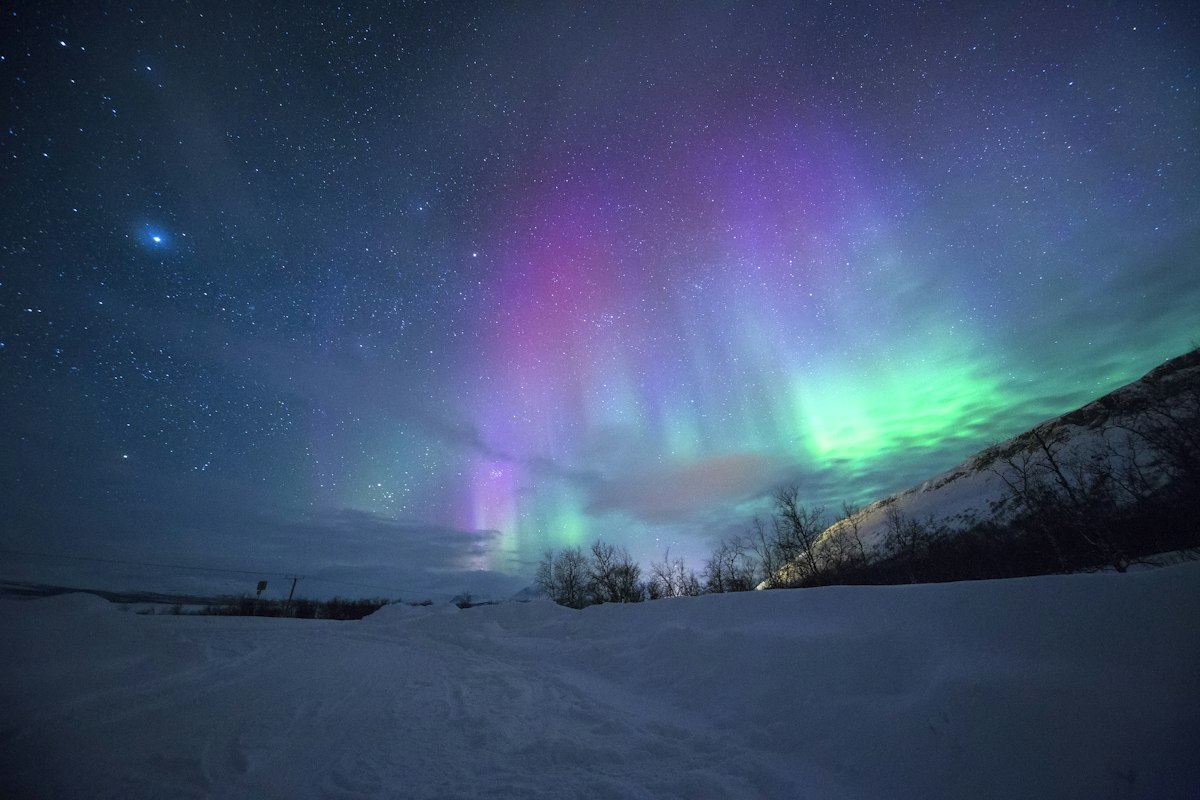
Can You See the Northern Lights in March? A Month-by-Month Aurora Guide
March is one of the most underrated months to chase the northern lights — and one of the best. If you've been wondering whether March is too late in the season, or whether January and February are significantly better, this guide will give you a clear, honest answer with everything you need to plan around it.
Short answer: yes, you can absolutely see the northern lights in March, and in many ways March offers advantages other winter months don't.
Why March Is Excellent for Northern Lights
The Equinox Effect
The spring equinox (around March 20) creates a natural boost to geomagnetic activity. This isn't a myth — it's a well-documented phenomenon called the Russell-McPherron effect. The orientation of Earth's magnetic field relative to the solar wind becomes more favourable during equinox periods, increasing the frequency and intensity of geomagnetic storms.
In practical terms, this means the Kp index (the measure of geomagnetic activity, 0–9) spikes more often in March than in, say, December or January. The February and March equinox windows are statistically among the highest-activity periods of the aurora year.
In 2026, we're in the tail of Solar Cycle 25's peak — meaning solar wind output and coronal mass ejections are still frequent, compounding the equinox effect. March 2026 could be a particularly strong month for aurora activity.
Better Temperatures
March is warmer than the deep-winter months across all aurora destinations:
- Tromsø: Average high of -1°C in March vs -4°C in January
- Rovaniemi: Average high of -2°C vs -10°C in January
- Abisko: Average high of -4°C vs -12°C in January
- Reykjavik: Average high of 3°C — practically mild
This matters if you're aurora hunting outdoors for 2–4 hours. Standing in -5°C is very manageable. Standing in -20°C with wind chill is a different challenge entirely.
Longer Days for Activities
By March, daylight has returned to Arctic destinations. In Tromsø, the sun reappears around January 21 after polar night, but by March the days are genuinely pleasant — 10–12 hours of light by the end of the month. This means you get real daytime activities (snowshoeing, dog sledding, whale watching, fjord drives) alongside evening aurora hunts.
In January, Tromsø has only 2–3 hours of blue twilight per day — beautiful, but limiting for daytime sightseeing.
Snow Conditions
March typically offers the best snow conditions for winter activities. In Finnish Lapland, the snowpack reaches its maximum depth in March, meaning husky sledding routes are at their best, snowmobile tracks are well-established, and the landscape looks exactly like you imagine Arctic Finland should look — pristine white, frozen lakes, and birch forests loaded with snow.
The One Downside: Shorter Dark Windows
The trade-off is darkness. In January, Tromsø has 18+ hours of potential aurora-viewing darkness per night. By mid-March, that's dropped to around 12 hours, and by late March it's closer to 10.
You still have plenty of dark hours — aurora peaks between 9 PM and 2 AM regardless of month — but the window is narrower than mid-winter. For destinations further south (like Tromsø or Rovaniemi), this is barely noticeable. For very far-north locations like Svalbard, the return of daylight is more dramatic.
March vs. Other Aurora Months
January
Pros: Maximum darkness (polar night at high latitudes), very cold — great for winter atmospherics, fewer tourists than Christmas period. Cons: Coldest month, short or non-existent daylight, highest chance of overcast skies in some regions. Aurora chance: High. Kp activity is elevated but without the equinox boost.February
Pros: Still dark, daylight returning pleasantly, excellent snow, fewer tourists than Christmas. Cons: Very cold. Cloud cover frequent. Aurora chance: High. February is many aurora chasers' favourite month — strong solar activity with improving weather trends.March
Pros: Equinox boost, warmer, better daylight for activities, best snow conditions, competitively priced. Cons: Shorter dark windows, some years cloud cover increases. Aurora chance: Very high. Arguably the statistically strongest month for geomagnetic activity.September/October
Pros: Autumn equinox effect (same as March), mild temperatures, autumn colours add photographic interest, cheaper. Cons: Less snow (none in early September), shorter darkness than deep winter. Aurora chance: High — particularly around the equinox window.Where to Go in March
Tromsø, Norway
The northern lights capital of the world and the most complete March destination. By March, the famous northern lights tours are still operating at full capacity — snowcat trips up the mountain, minibus tours to dark sites, and guided photography nights. The city itself is animated, with excellent restaurants, the Arctic Cathedral to visit, and cable car rides for views.
March is also prime time for whale watching in the Tromsø area — humpback and sperm whales are frequently spotted in the nearby fjords. Combine an afternoon whale watching boat with an evening aurora hunt for an extraordinary day.
March flight prices to Tromsø are typically lower than December–January, making it one of the better-value months.
Abisko, Sweden
Abisko's famous microclimate — created by Lake Torneträsk to the east — provides statistically clearer skies than most of Scandinavia. The Aurora Sky Station runs until mid-March, offering a gondola ride up the mountain to a heated viewing platform at 900 metres above sea level, above the cloud layer.
Abisko in March offers some of the most reliable clear-sky conditions in all of Scandinavia. If cloud cover has frustrated you elsewhere, Abisko is worth the trip.
Rovaniemi, Finland
Finish Lapland is magnificent in March. Rovaniemi sits on the Arctic Circle, and by March the days are about 12 hours long — perfect for activity-packed days before aurora hunting at night. Dog sledding, snowmobile safaris, and reindeer farm visits are all available and running at their best with excellent snow.
Rovaniemi's glass igloo hotels (at nearby Saariselkä and Kakslauttanen) are still operational in March, making it possible to watch the aurora from your bed through a heated glass ceiling.
Alta, Norway
Alta is one of the best-kept secrets in aurora travel. Situated at 70°N and inland from the coast, Alta has some of the best clear-sky statistics in all of northern Norway. The Northern Lights Cathedral is an architectural gem, and the surrounding fjords are beautiful.
Aurora activity probability in Alta during March: roughly 60–70% on any given clear night (and Alta has more clear nights than Tromsø).
Reykjavik, Iceland
Iceland is slightly trickier than Norway/Finland in March because cloud cover increases as you approach April. However, Reykjavik is so accessible (cheap flights from the UK and USA) and so scenic that it remains a top choice. Drive east to Akureyri or north to the Snaefellsnes Peninsula for better sky clarity.
The advantage: Iceland in March offers dramatic winter landscapes (glaciers, lava fields, the Golden Circle) combined with genuine aurora probability, all at reasonable prices.
Planning Your March Aurora Trip
Best Dates Within March
- Early March (1–10): Dark windows still excellent (14–16 hours). Good balance of winter feel and improving temperatures.
- Mid-March (10–20): Equinox approaching — geomagnetic activity picking up. 12–14 hours of darkness still works well for aurora viewing.
- Late March (20–31): The equinox window is here — statistically the best geomagnetic period. Days are long but you still have 8–10 hours of darkness including the peak 9 PM–2 AM window.
What to Expect Weather-Wise
Norway (Tromsø): Coastal climate means cloud is the constant variable. Expect 3–4 clear nights per week on average, but check the Norwegian Meteorological Institute forecast obsessively.
Sweden (Abisko): Drier, clearer inland climate. March typically averages 4–5 clear nights per week.
Finland (Rovaniemi/Lapland): Continental climate with generally more stable skies than coastal Norway. March can be very clear.
Iceland (Reykjavik): Variable. Atlantic weather systems move fast. Cloud cover is frequent but breaks occur. Be prepared to drive to clear sky.
How Many Nights to Book
With March's equinox boost and improving weather trends:
- 3 nights: ~60–70% chance of seeing at least one display
- 5 nights: ~80–85% chance
- 7 nights: ~90%+ chance
The equinox effect increases the likelihood of stronger displays when they occur. In March 2026, even Kp 5+ events (visible from further south) are realistic possibilities.
March Aurora Checklist
- ✅ Book 5+ nights for best probability
- ✅ Check equinox dates (around March 20) — aim to be in destination during 15–25 March window
- ✅ Download SpaceWeatherLive or My Aurora Forecast app
- ✅ Pack warm layers — still cold, especially at night
- ✅ Rent a car for flexibility to chase clear skies
- ✅ Book one guided tour for expert dark-sky knowledge
- ✅ Take advantage of daytime activities — March snow conditions are excellent
- ✅ Bring a tripod if you want photos
Final Verdict
March is not too late for the northern lights. For many aurora hunters, it's the ideal month — you get the geomagnetic equinox boost, warmer temperatures, excellent snow conditions for winter activities, reasonable daylight for sightseeing, and lower prices than the Christmas peak.
If you can travel in late February or early-to-mid March, you hit the sweet spot: plenty of darkness, the equinox approaching, and winter still firmly in place.
Plan your March aurora trip with our guides to Tromsø, Abisko, Rovaniemi, and Reykjavik.